$20 Million Paid on Debts People Didn’t Owe: How to Spot a Phantom Debt and Protect Your FICO and VantageScore
A federal court has frozen the assets of a debt collection operation the FTC says pressured people into paying debts they often did not owe. According to the FTC, people paid it more than $20 million.
The scam is called phantom debt collection, and it works because most people do not know exactly what is on their credit reports.
What the FTC says the collectors did
- Left urgent voicemails threatening to call people’s employers and family members
- Threatened lawsuits, wage garnishment and liens they never intended to file
- Claimed to be a law firm when they were not
- Never disclosed they were debt collectors and never sent the written notice showing what was owed and to whom
The court’s order, issued November 5, 2026, freezes the operation’s assets and places it under a court-appointed receiver. These are allegations; the court will decide the case.
The phantom debt checklist
- Is the debt on my credit report? A legitimate collection usually appears on at least one of your three reports.
- Do I recognize the original creditor? Phantom collectors often will not say.
- Did I get a written notice? Collectors are required to send one. A phone call is not enough.
- Are they asking for personal information? Never confirm your Social Security number, bank details or date of birth to an unsolicited caller.
- Are they rushing me? “Pay today or else” is the clearest sign of a scam.
Your score is your first line of defense
Lenders use two main scoring families: FICO and VantageScore. A collection account, real or not, can drag down both. The other factor both models weigh heavily is something you control every month: how much of your credit card limits you are using.
Your Credit Armor membership includes your VantageScore 3.0 credit score, three-bureau reports from Experian, TransUnion and Equifax, alerts when something new shows up, and $1 million in identity fraud insurance. If a collection appears that you do not recognize, you will see it before a collector calls.
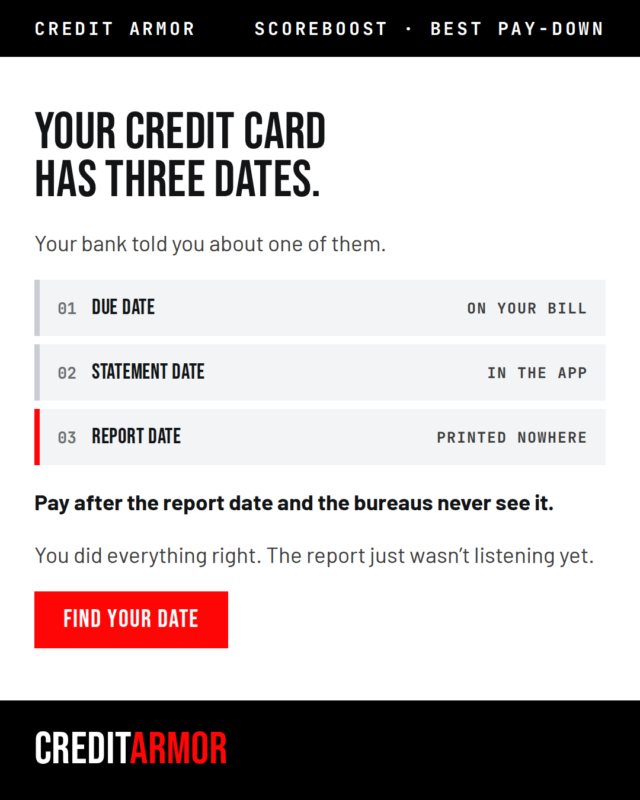
SCOREBOOST™ · BEST PAY-DOWN
Every app shows you the points. Ours shows you the date.
Your credit card usually reports your balance to the bureaus before your bill is due. Pay after that day and the higher balance is what your FICO and VantageScore see, even if you pay in full.
Credit Armor’s Best Pay-Down tool gives you a Best Pay Down By date for each of your cards, so you know exactly when to pay.
If you think you have been targeted
- Do not pay, and do not give out personal details.
- Ask for a written validation notice.
- Pull your credit reports and compare them to what the caller said.
- Report the call at ReportFraud.ftc.gov.
Source: Federal Trade Commission press release, November 2026.