Why Your Credit Score Is Different on Every App: FICO vs. VantageScore, Explained
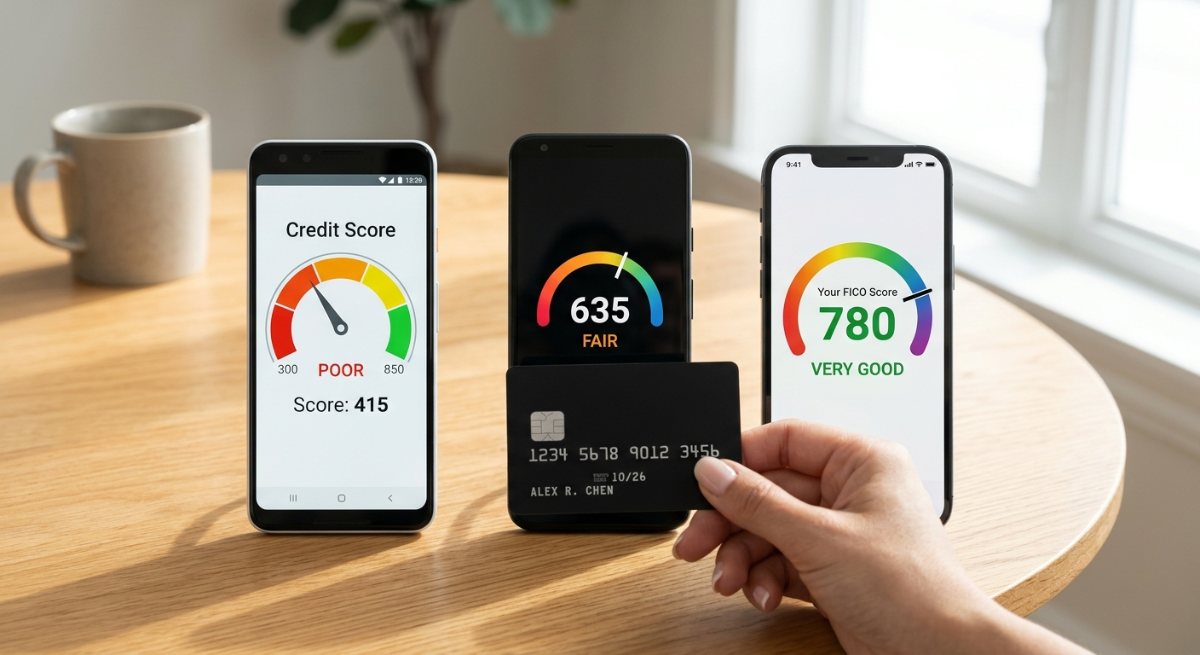
You check your credit score in your banking app and see one number. Your credit card app shows another. A lender pulls your credit and quotes a third. None of them are wrong. They are just different scores.
Two scoring families, many versions
Almost every credit score you will see comes from one of two companies:
- FICO, the long-time standard. Lenders use several versions, including FICO Score 8 (the most common), FICO 9, FICO 10, and older “Classic” models used in many mortgage decisions.
- VantageScore, built jointly by Experian, TransUnion and Equifax. VantageScore 3.0 and 4.0 are the versions you will see most often. Fannie Mae and Freddie Mac now accept VantageScore 4.0 for mortgages, alongside Classic FICO.
Your Credit Armor membership shows your VantageScore 3.0 credit score, plus three-bureau reports so you can see exactly what each bureau has on file.
Why the numbers don’t match
- Different formulas. Each model weighs the same information differently. For example, FICO 8 still counts a paid collection, while FICO 9 and VantageScore ignore it.
- Different bureaus. Experian, TransUnion and Equifax do not always have identical information, so a score built from one bureau can differ from another.
- Different days. Your report changes every time a lender updates an account. A score pulled Monday and a score pulled Friday can be built from different balances.
The one thing every score agrees on
Whatever the model, how much of your available credit you are using is one of the biggest factors in your score. Both FICO and VantageScore look at the balances your card companies report.
And here is the part most people miss: your card company usually reports your balance on your statement date, not your due date. If you pay in full on the due date, the higher balance has already been reported.
SCOREBOOST™ · BEST PAY-DOWN
Every app shows you the points. Ours shows you the date.
Whether a lender pulls FICO or VantageScore, the balance your card reports is what counts. Credit Armor’s Best Pay-Down tool gives you a Best Pay Down By date for each card, so you know when to pay to have a lower balance reported.
What to watch instead of chasing one number
- Look at all three reports, not just one score. Errors on one bureau will not show up in a score built from another.
- Watch your reported balances. Time your payments to your statement dates, not just your due dates.
- Know which score matters for your goal. If you are applying for a mortgage, ask your loan officer which score they use.
The number will always move a little. What you can control is what gets reported.